7 E. Silver Springs Blvd., Suite 300, Ocala, FL 34470


Pain and suffering are part of life, but after an accident, they can become part of a much bigger legal conversation. In a serious injury case, there are many types of losses to think about, from medical bills and missed income to long-term care needs and changes in a person’s daily life. This article focuses on one specific part of that conversation: pain and suffering.
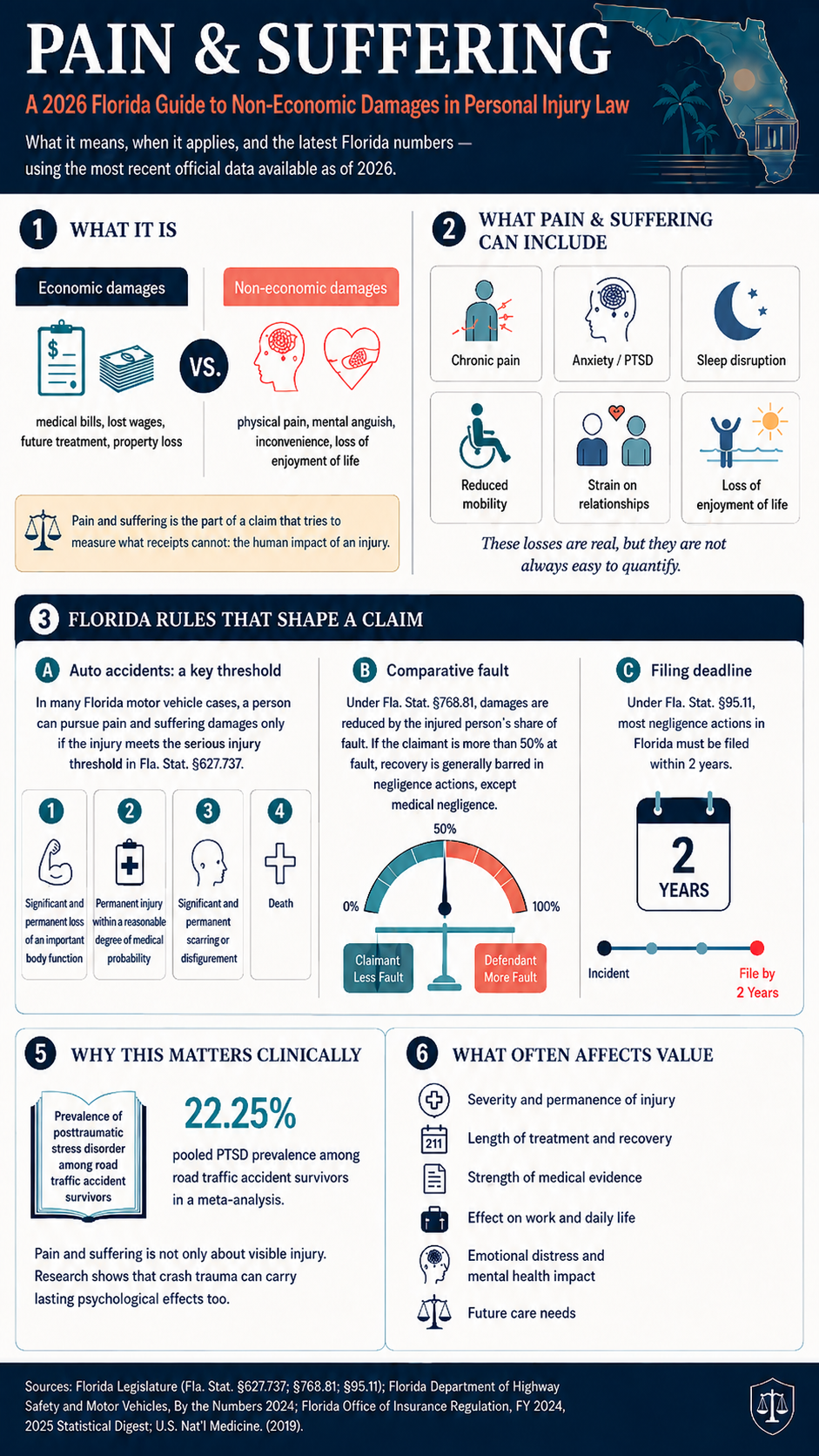
Economic Damages vs. Non-Economic Damages
Unlike a hospital bill or a repair estimate, pain and suffering does not come with a clear dollar amount attached to it. It has to be understood, documented, and connected to the way an injury has affected someone’s body, emotions, routine, relationships, and quality of life.
Other losses are easier to calculate. If you receive an emergency room bill or a prescription receipt, those costs can usually be tied to a specific number. These are known as economic damages.
However, Florida law also recognizes pain and suffering. This is a legal term used in personal injury law to describe the physical pain and emotional distress a person experiences because of an accident. It is considered non-economic damages.
This means it doesn’t always have a clear dollar amount attached to it, but it still has a lasting impact on the accident victim and may be included as part of a personal injury compensation claim.
Infographic Source: https://pmc.ncbi.nlm.nih.gov/articles/PMC5779792/
What Pain and Suffering Includes
Personal injury accidents can happen almost anywhere and usually occur when someone else acts carelessly or fails to maintain a safe environment. It can look different for each person, but overall it may include:
How Do You Prove Pain and Suffering?
Pain and suffering in a legal claim must be supported by strong evidence. We have to show not only that you were injured, but how that injury changed your daily life, health, independence, and emotional well-being. The stronger and more consistent the documentation is, the easier it may be to demonstrate the full impact the injury has had.
Evidence that may help prove pain and suffering includes:
This evidence helps tell the full story of what the accident cost beyond the bills alone. It gives your pain context and shows the lasting effects of the injury.

What Affects The Value of Your Claim?
The value of pain and suffering damages depends on the specific facts of the case. Because these losses are personal and not always easy to measure, several factors may affect the value of a claim, including:
An experienced personal injury attorney can help document the full extent of what you have been through and explain how these factors may apply to your case.
Can I Find a Pain and Suffering Compensation Calculator Online?
There is no automatic multiplier for pain and suffering under Florida law. Many online calculators use broad or generic estimates that do not reflect the full facts of a personal injury claim. The value of pain and suffering depends on the severity of the injury, the strength of the evidence, the impact on daily life, and whether the injury has caused lasting physical or emotional harm.
Pain and Suffering Compensation in Florida
Florida law allows injured parties to seek compensation for pain and suffering, but some claims may be subject to specific restrictions, especially auto accident claims. In these cases, an injured person must meet certain requirements before they can pursue pain and suffering damages from the at-fault party.
Don’t Settle Too Early
One of the biggest mistakes people make after an accident is settling too early. At first, you may not know how serious your injuries are. Some symptoms take days or weeks to fully appear. Other injuries may require ongoing treatment, physical therapy, follow-up appointments, prescription medications, or long-term care.
That’s why it’s very important to understand the full extent of your injuries before accepting a settlement. A quick offer may feel helpful in the moment, especially when bills are coming in. But once you accept a settlement, you may not be able to ask for more later if your pain gets worse or your recovery takes longer than expected.

Before you accept a settlement after an accident, ask yourself:
If the answer to any of those questions is unclear, it may be a good time to talk to a personal injury lawyer.
Overall Takeaways
1. Pain and suffering can be a major part of a personal injury claim. These damages go beyond monetary losses to account for the physical pain and emotional distress caused by an accident.
2. Strong documentation can give your pain a voice. Medical records, photographs, witness statements, expert opinions, and pain journals can help show how the injury affected your health, comfort, independence, and everyday life.
3. Florida law may affect what damages are available. In some cases, especially auto accident claims, rules involving PIP, the serious injury threshold, comparative fault, and filing deadlines may affect whether pain and suffering damages can be recovered.
Contact Hightower & Hightower For Local Guidance
To speak with a personal injury attorney about a recent accident in Ocala or the surrounding Central Florida area, reach out to Hightower & Hightower, P.A today through our contact form here, or by calling us at 352-656-6801. Consultations are free, and there is no obligation to move forward.